Medical Tech Outlook Weekly Brief
Be first to read the latest tech news, Industry Leader's Insights, and CIO interviews of medium and large enterprises exclusively from Medical Tech Outlook
A featured contribution from Leadership Perspectives: a curated forum reserved for leaders nominated by our subscribers and vetted by our MedTech Outlook APAC Advisory Board.

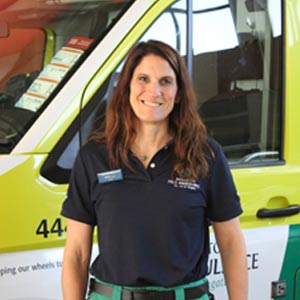
Erica Douglass is an emergency healthcare leader focused on strengthening patient care through clinical innovation and new models of service delivery. Her approach combines clinical expertise, frontline insight and technology to improve access, decision-making and system resilience.
Rethinking Emergency Care through Virtual Models
Emergency ambulance services face growing demand at a time when traditional healthcare systems are already under pressure. An aging population, increasing chronic disease burden, workforce constraints and emergency department overcrowding are affecting how emergency care is delivered.
I see virtual care as an important part of building resilience because it expands the ways emergency services can respond to patients. Not every 111 emergency call necessarily requires a physical ambulance response. Experienced clinicians can assess whether a patient's needs may be safely addressed through clinical advice, referral pathways, community-based care or remote monitoring.
My experience with Enhanced Virtual Care has reinforced the value of secondary clinical triage by experienced paramedics. Their prehospital expertise allows them to assess suitable patients and determine the most appropriate next step while preserving frontline resources for time-critical emergencies.
For me, resilience is not simply about responding to more demand. It is about making better decisions about how care is delivered. Patients benefit when they receive timely clinical guidance and are connected with an appropriate care pathway, and emergency crews remain available when their skills and physical presence are most needed.
Putting Clinical Judgment at the Center
Technology alone does not improve care. Its value comes from how effectively it amplifies clinical expertise.
Clinical decision support systems can provide structured assessment tools, risk stratification and access to integrated patient information. Data analytics can help identify patterns of demand and operational pressures, while telehealth technology can support remote assessments through video, photographs and digital vital signs where available.
“Technology should never be the objective; it is only a tool. Start by understanding a problem deeply, engage frontline staff who understand operational realities, and involve patients in designing solutions.”
I do not see these tools as substitutes for clinical judgment. Experienced paramedics bring contextual awareness, communication skills and risk assessment capabilities that cannot be fully replicated by algorithms. Emergency care often requires understanding the person behind the clinical information and recognizing details that may not fit neatly into a decision-support system.
The strongest models bring technology and clinical expertise together. Data can inform a decision, but clinicians need to interpret that information in the context of each patient's circumstances, concerns and healthcare needs. That combination supports safer disposition decisions and more personalized care.
Keeping Patients at the Center
One of the most important lessons I have learned is that virtual care should never be introduced simply as a demand management tool. It must first be a patient care strategy.
Patients generally care less about which service provides their care than about receiving the right care at the right time. That means successful virtual care begins with understanding patient needs, expectations and barriers to accessing healthcare.
Communication is central to that experience. Patients are more receptive to virtual care when they feel listened to, understand the clinical reasoning and have confidence in the clinician supporting them. Strong communication skills, therefore, matter just as much as clinical skills.
I have also found that virtual care depends on strong relationships between healthcare services. Primary care, urgent care, community services and hospitals need effective referral pathways for patients to move between appropriate points of care. Telehealth should connect these services, not create a separate healthcare system.
Leading Meaningful Innovation
The future of technology-enabled prehospital care will depend on more than new tools. Workforce capability, digital equity, data integration and public trust will all influence how effectively innovation translates into patient care.
Virtual care requires clinicians with advanced assessment skills, risk tolerance and expertise in remote patient management. Training and support need to reflect those demands. At the same time, digital models need to account for patients who may face barriers to technology access or use.
Data integration is another area where careful leadership matters. Clinicians need access to relevant patient information across healthcare settings, and fragmented systems can create inefficiencies and clinical risk. Patients also need confidence that virtual assessment models are safe, evidence-based and designed around their care.
For professionals entering emergency care, my advice is to remain focused on patient outcomes. Innovation is rarely about creating something entirely new. More often, it involves finding better ways to deliver the fundamentals of excellent patient care.
Technology should never be the objective. It is a tool. I encourage emerging leaders to understand a problem deeply, engage frontline staff who understand operational realities and involve patients in designing solutions.
Developing expertise in data, systems thinking and digital health will become increasingly valuable, but these skills should complement strong clinical foundations. Meaningful innovation comes from connecting clinical practice, operational understanding and technological opportunity while keeping patient care at the center.