Medical Tech Outlook Weekly Brief
Be first to read the latest tech news, Industry Leader's Insights, and CIO interviews of medium and large enterprises exclusively from Medical Tech Outlook
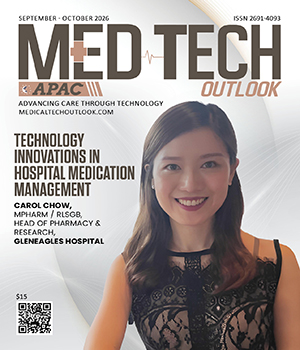
Automated pharmaceutical technology innovations for medication management are well documented and commonly used nowadays to reduce medications errors, improve efficiency and quality of care. However, these innovations have led to new and unforeseen challenges. Various computerized processes are implemented at different points of the medication-use pathway, and these are divided into the following care points:- • Computerized prescription order entry systems (CPOE) • Hospital / Pharmacy information system (HIS) • Automated dispensing cabinets / machine (ADC) • Medication repackaging system (unit dose packaging) • Barcode medication administration (BCMA) • Computerized medication administration records (CMARs) - ‘Smart’ infusion pumps, with drug libraries information on common concentrations, dosing units and limits. Despite how pharmacy departments have worked with technology vendors and the information technology sector to improve the usability of systems, it is still not error-proof. In this article, I shall focus on medication management from the pharmacist’s perspective and will discuss the first four points above. Let’s begin with CPOE and HIS. When these two systems are directly interfaced, they should be capable of issuing medication safety alerts, supporting drug-drug and drug-disease interactions and providing a basis for clinical decision making. One of the first challenges lies in the prescribers’ adoption rate, especially for individuals who are not as computer literate, requiring extensive training to become familiar with HIS. Secondly, prompts that alert against drug interaction, allergy or overdose often lead to alert-fatigue and eventually become easy to ignore. One recent case involved one of the drugs known to induce Stevens-Johnson syndrome (SJS) and toxic epidermal necrolysis (TEN) – Allopurinol. Proactive measures were taken since 2008 to perform mandatory Human leucocyte antigen-B (HLA-B)*5801 g
Founded in 2009, JEASHIA has built its ENT diagnostic device business around a full-chain manufacturing model. It independently develops and produces optical assemblies, medical structural parts and circuit control modules under one quality system, giving JEASHIA direct control over component fit, testing and batch traceability. “Our integrated manufacturing approach allows us to control quality from raw materials through final inspection while giving customers practical, customized devices for different clinical needs,” says Iris Zhang, sales director. This structure helps clients overcome multiple challenges associated with fragmented sourcing while enabling two key outcomes: superior product reliability and optimized total cost efficiency. Components from multiple vendors can arrive with inconsistent dimensions, uneven workmanship and mismatched interfaces, affecting illumination, image quality and product durability. The company’s in-house production standardizes testing across each stage while reducing cross-vendor logistics, repeated sample validation, third-party inspection and excess spare-parts inventory. Bulk raw-material purchasing and synchronized production shorten manufacturing cycles and limit losses caused by mismatched outsourced components. This model allows JEASHIA to manage reliability and total cost within the same production system rather than treating them as separate priorities..


Developed from a retired optical engineer’s vision to miniaturize the functionality of ceiling-mounted OR lights, TAIYO Corporation’s OPELAIII set a new standard for surgical precision, especially in mobile and humanitarian settings. In 2025, the company returns to the spotlight with OPELAIII Cx—a next-generation model developed using real-world surgical feedback. While the original was praised for its brightness and portability, surgeons also identified opportunities for improvement, especially in terms of long-term comfort and usability. TAIYO responded by enhancing the most effective features of the original and redesigning the system with a strong focus on ergonomics and wearability. The result is a refined surgical lighting solution that retains the core strengths of its predecessor while addressing user concerns, highlighting the company’s continued commitment to practical innovation driven by clinical insight. To meet this goal, the engineering team refined six critical aspects of the original model. Brightness increased from 145,000 Lux to the IEC-permitted maximum of 160,000 Lux. Color temperature was adjusted from 4,500K to a crisper 5,000K, enhancing clarity in deep-tissue procedures. Perhaps most impressively, the light source module was downsized by 52 percent, and overall weight dropped from 390g to just 310g. To complement this lighter build, TAIYO partnered with renowned Japanese motorcycle helmet maker OGK KABUTO to develop a headgear system that offers superior ergonomics, COOLMAX® breathable pads, and a fit that eliminates temple pressure, keeping surgeons focused and fatigue-free. Designed Around the Surgeon Improving usability was a key focus of the redesign to enhance comfort and operational efficiency for surgeons. Controls were relocated to the back of the head unit, giving surgeons intuitive access to the power switch and five-stage brightness settings. Light angle and spot size were adjusted using a simplified dual dial. A new dual-battery charging dock offers faster recharge times and clearer battery indicators. TAIYO also retained nickel-metal hydride batteries to mitigate the safety risks often associated with lithium-ion power sources in surgical environments.
Radiation therapy has never been short on innovation. Scanners capture tumors in remarkable detail, contouring software outlines them with precision, planning tools adapt dosing strategies in real time, and delivery systems deliver radiation with pinpoint accuracy. Each advance has raised the standard of care. But because these tools are often built in silos by different vendors, they rarely speak the same language. Data sits in separate systems, records are transferred manually and the very breakthroughs designed to speed care can create friction where time matters most. Oncosoft, a vendor-neutral platform, resolves this disconnect with an ecosystem designed to unify the entire radiation therapy workflow, from diagnosis through follow-up. In addition to the core modules OncoStudio and OncoFlow, Oncosoft is expanding its treatment stages through the in-development OncoRPT and OncoPlan modules. Slated to be coordinated through Oncosoft’s central AI engine, OncoAgent, this system will automate the complex, repetitive tasks that once consumed hours of clinical effort and ensure information flows securely and continuously across departments. More than 100 hospitals worldwide have already adopted Oncosoft. For them, the value is clear. Oncosoft doesn’t demand a costly rip-and-replace of existing infrastructure. Instead, the vendor-neutral platform is designed for flexible integration with existing Picture Archiving and Communication Systems (PACS), Treatment Planning Systems (TPS), Electronic Medical Records (EMR) and therapy machines by adhering to international standards such as DICOM and HL7. Avoiding vendor lock-in protects past investments, lowers adoption barriers and gives healthcare institutions the freedom to scale on their own terms. “We’re building a solution that benefits the entire healthcare ecosystem,” says Jin Sung Kim, CEO. “Clinicians can focus on what matters most—patient care—instead of inefficient, time-consuming tasks. Hospitals achieve better resource utilization and workflow integration. Most importantly, patients receive faster, more personalized treatment with reduced side effects. It’s about creating better outcomes for everyone.”

Patient Monitoring Devices

Dr Wong Shing Yip, MBBS (Singapore) MRCP (UK) PG Dip Derm (London), Medical Advisor, Board , CoNEX Healthcare Pte Ltd
Medical Imaging Systems

Dr. Jason Chan, Senior Consultant Medical Oncologist, National Cancer Centre Singapore
Regenerative Medicine

Trent Aland, Executive Manager - Clinical Care, Icon Group
Physiotherapy and Pain Management

Todd Bartholomew, National Clinical Lead & Interim Chief Clinical Officer, Better Rehab
ENT Devices

Dr. Ariella Naim, Senior Audiologist, Audio Help Hearing Centers

Regenerative Medicine
Benedict Sulaiman, Director of IT-CTO, Mandaya Hospital Group

Regenerative Medicine
Dr Ana Maria Y. Jimenez, Executive Director of Nursing, Aspen Medical – Fiji
Advanced 3D mammography improves breast cancer detection through detailed imaging, enhancing accuracy, reducing unnecessary follow-ups and supporting earlier diagnosis.
Advanced ENT diagnostic devices support efficient healthcare delivery and sustainable market growth across the Asia Pacific region.
Advancing Practical Care through Medical Technology
This issue features JEASHIA, recipient of the Top ENT Diagnostic Devices in APAC 2026 award. The company makes optical assemblies, structural components and control modules under a single quality system, giving it greater control over testing and traceability. Its portfolio covers customizable otoscopes, ophthalmoscopes and video ENT devices for different clinical settings. The company also offers customization around factors such as illumination, magnification and ear-tip selection, which can affect examinations.
The issue also features perspectives from healthcare leaders working to improve clinical practice. Dr. Ariella Naim, Senior Audiologist at Audio Help Hearing Centers, explains the differences between over-the-counter hearing devices and prescription hearing aids, stressing the value of professional assessment, personalized fitting and continued follow-up. Trent Aland, Executive Manager – Clinical Care at Icon Group, examines how standardization can help cancer centers deliver consistent care across different countries while still allowing teams to account for local practices.
Together, these stories show that better healthcare technology is about making technology work reliably within real clinical environments and supporting the people who use it. The stories also highlight how thoughtful design, clinical expertise and consistent practice are helping shape better care across APAC.