Medical Tech Outlook Weekly Brief
Be first to read the latest tech news, Industry Leader's Insights, and CIO interviews of medium and large enterprises exclusively from Medical Tech Outlook
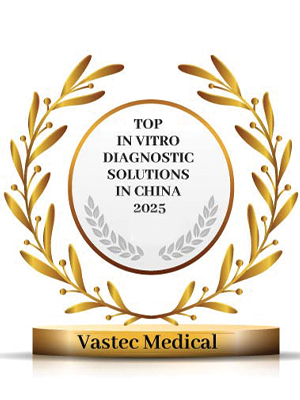
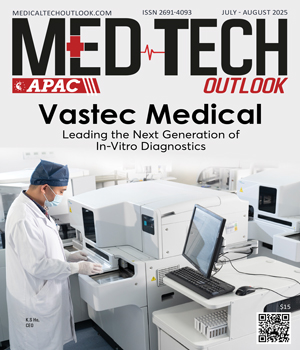
As the global healthcare industry moves toward faster, more accurate and cost-effective diagnostics, China’s in-vitro diagnostic (IVD) market is undergoing a profound transformation. Leading this evolution is Vastec Medical, a Hong Kong-based company that has become a key force in advancing diagnostic capabilities across the country. Founded in 1993, Vastec Medical has built a reputation for delivering state-of-the-art IVD solutions that enhance clinical precision, operational efficiency, and patient accessibility. The company specializes in haemostasis, molecular diagnostics, and clinical chemistry—three areas critical to early detection and effective treatment planning. What sets Vastec apart is its commitment to integrating the latest scientific developments into practical, real-world applications. By continuously evolving its technology portfolio, the company equips healthcare providers with faster and more reliable diagnostic tools, enabling improved patient outcomes and setting new benchmarks in medical testing. Expanding Reach through a Robust Distribution Network A key driver of Vastec Medical’s success is its extensive, multi-level distribution network, ensuring widespread access to advanced diagnostic solutions. The company reaches 1,599 Class III hospitals through a network of 1,139 distributors spanning 31 provinces, municipalities, and autonomous regions. Vastec Medical’s long-standing partnership with Sysmex is a major force behind this reach. Since 1997, the company has held exclusive national distribution rights for Sysmex haemostasis products in China. As a renowned IVD supplier, Sysmex leads China’s haemostasis analysis market, holding a 40.8 percent market share and a 74.0 percent penetration rate among the country’s top 100 hospitals. This partnership reinforces the company’s leadership in clinical diagnostics and strengthens its nationwide healthcare impact. Driving Innovation through Strategic Partnerships Beyond distribution, Vastec Medical is committed to developing advanced diagnostic solutions. In December 2019, the company launched the IVD Ecosphere project, uniting leading local IVD manufacturers with independent intellectual property rights and renowned foreign manufacturers in non-haemostasis IVD products. This initiative enhances product accessibility and integration, expanding China’s diagnostic capabilities.
Oneject blends Indonesia’s deep-rooted focus on patient care with world-class technology to manufacture smarter and safer medical devices. A multi-branded product company, it is driving the next wave of innovation across Southeast Asia by championing homegrown inventions with its healthcare solutions. With a large and growing domestic market and unwavering commitment to global quality standards, the company is elevating safety and reliability for patients and healthcare professionals. Oneject also serves as a trusted OEM partner for domestic and international principals. Over a 22-year journey, it has built a strong foundation in regulatory compliance and quality assurance, being the first company in Indonesia to obtain the EU MDR certification, along with ISO 13485 and WHO Prequalification of Medical Devices, amongst other certifications. “A commitment to fueling our regional vision with local resilience is at the heart of everything we do,” says Edwin Yahya, chief operating officer. To meet evolving clinical demands, Oneject also plans to broaden its product category portfolio, aiming to provide a full suite of consumable products for hospitals. This expansion will further strengthen access to high-quality medical consumables for healthcare providers in Indonesia and around the world. Oneject’s products span three flagship divisions — syringes, blood purification, and blood collection systems. Its wider portfolio also includes infusion therapy products, radiology equipment, and diagnostic devices. Oneject’s latest breakthrough, the OneBag Blood Bag and Oneject Hemodialysis Machine, marks a pivotal step in the mission to improve healthcare supply security and self-sufficiency with homegrown, high-tech solutions. OneBag comes in double and triple bag configurations with a built-in safety pouch and safety needle feature. The team’s three and a half years of dedicated effort have culminated in a state-of-the-art manufacturing line for OneBag, elevating Indonesia's medical device standards. Drawing on six years of field data, Oneject has engineered the Hemodialysis Machine with dual pump technology to guarantee uninterrupted care and faster turnaround for every session. Studies show that nearly 60 percent of three-hour treatments are disrupted by the failure of a single pump, leaving patients waiting and healthcare staff scrambling to respond. The Hemodialysis Machine features a pioneering, fully stainless-steel automatic reverse-osmosis system built to international water-treatment standards. By automating the process, these units significantly reduce technician workload. It is also equipped with an intuitive Indonesian-language interface for local healthcare professionals. Oneject offers a comprehensive and advanced range of high-safety syringes and needles engineered to prevent reuse and needle-stick injuries, ensuring greater protection for both healthcare professionals and patients. Its Auto Disable Syringes feature a mechanism that automatically locks and breaks the plunger after a single use, eliminating the risk of reuse and reducing the transmission of bloodborne pathogens. These syringes are trusted by blue-chip NGOs such as UNICEF and played a vital role during global COVID-19 vaccination efforts.


Developed from a retired optical engineer’s vision to miniaturize the functionality of ceiling-mounted OR lights, TAIYO Corporation’s OPELAIII set a new standard for surgical precision, especially in mobile and humanitarian settings. In 2025, the company returns to the spotlight with OPELAIII Cx—a next-generation model developed using real-world surgical feedback. While the original was praised for its brightness and portability, surgeons also identified opportunities for improvement, especially in terms of long-term comfort and usability. TAIYO responded by enhancing the most effective features of the original and redesigning the system with a strong focus on ergonomics and wearability. The result is a refined surgical lighting solution that retains the core strengths of its predecessor while addressing user concerns, highlighting the company’s continued commitment to practical innovation driven by clinical insight. To meet this goal, the engineering team refined six critical aspects of the original model. Brightness increased from 145,000 Lux to the IEC-permitted maximum of 160,000 Lux. Color temperature was adjusted from 4,500K to a crisper 5,000K, enhancing clarity in deep-tissue procedures. Perhaps most impressively, the light source module was downsized by 52 percent, and overall weight dropped from 390g to just 310g. To complement this lighter build, TAIYO partnered with renowned Japanese motorcycle helmet maker OGK KABUTO to develop a headgear system that offers superior ergonomics, COOLMAX® breathable pads, and a fit that eliminates temple pressure, keeping surgeons focused and fatigue-free. Designed Around the Surgeon Improving usability was a key focus of the redesign to enhance comfort and operational efficiency for surgeons. Controls were relocated to the back of the head unit, giving surgeons intuitive access to the power switch and five-stage brightness settings. Light angle and spot size were adjusted using a simplified dual dial. A new dual-battery charging dock offers faster recharge times and clearer battery indicators. TAIYO also retained nickel-metal hydride batteries to mitigate the safety risks often associated with lithium-ion power sources in surgical environments.
In Vitro Diagnostic

Dr. Henry Soeharno, Orthopaedic Surgeon, Singapore General Hospital
In Vitro Diagnostics

Winny Xie, Molecular Predictive & Diagnostic Lab Head, PT Prodia Widyahusada Tbk
In Vitro Diagnostic
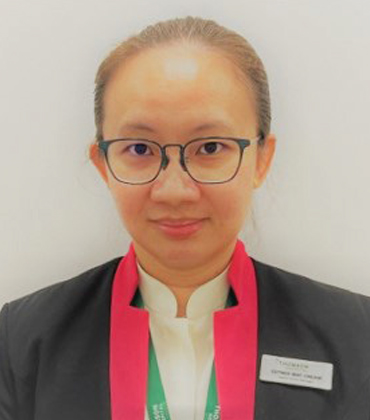
Esther May Cheam Sue San, Senior Nurse Manager, Thomson Hospital Kota Damansara
In Vitro Diagnostic
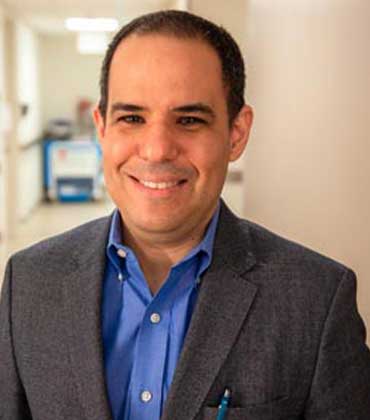
Adrian Salmon, Director, Sleep Medicine Fellowship Program, UConn Health
In Vitro Diagnostic

Stewart Graham, The John and Marilyn Bishop Foundation Endowed Chair and Director of Alzheimer’s Disease Research, Beaumont Health

Regenerative Medicine
Carol Chow, Head of Pharmacy & Research, Gleneagles Hospital Hong Kong

Medical Imaging Systems
Dr. Jason Chan, Senior Consultant Medical Oncologist, National Cancer Centre Singapore
Delivering Innovation Across Diagnostics and Care
The key technology trends driving the expansion are AI-powered diagnostic platforms, sensor-integrated rehabilitation systems and bioelectronic modulation devices. AI-powered diagnostic platforms improve in vitro testing by increasing speed and early disease detection through automated data analysis. Sensor-integrated rehabilitation systems enhance therapy by tracking patient movement and progress in real time, allowing for personalized adjustments and improved outcomes. Bioelectronic modulation devices support nervous system regulation by delivering targeted electrical stimulation to restore function, reduce symptoms and enable long-term neural recovery.
This edition of Medical Tech Outlook APAC explores the rapid evolution of diagnostic precision, data-driven rehabilitation and neuroregulation technologies, featuring innovators in AI-enabled in vitro diagnostics, sensor-based recovery platforms and targeted bioelectronic devices transforming clinical and therapeutic care.
It features thought leadership articles from industry leaders, including Dr. Jason Chan, Senior Consultant Medical Oncologist, National Cancer Centre Singapore. He examines how multidimensional pan-omic assays are advancing precision oncology in Asia. Adrian Salmon, Director, Sleep Medicine Fellowship Program, at UConn Health, explores how AI, wearables and digital CBT are reshaping sleep disorder diagnosis and treatment. He highlights the growing role of less invasive therapies and digital tools in expanding access and improving long-term outcomes.
We hope this edition helps you explore the latest innovations across diagnostics, treatment and care delivery in your healthcare environment.