Medical Tech Outlook Weekly Brief
Be first to read the latest tech news, Industry Leader's Insights, and CIO interviews of medium and large enterprises exclusively from Medical Tech Outlook
A featured contribution from Leadership Perspectives: a curated forum reserved for leaders nominated by our subscribers and vetted by our MedTech Outlook APAC Advisory Board.


In the age of smartphones and wireless communication, gastrointestinal (GI) endoscopists across the globe look to future trends in endoscopic technology. There is no doubt that technology is rapidly evolving with ever-increasing connectivity amongst individuals, institutions, and even nations. Yet, designing a state-of-the-art endoscopy suite remains a challenge when it comes to integrating devices with all the different software platforms required to perform a procedure, capture images, monitor quality metrics, track scope reprocessing, and ultimately achieve the desired outcomes which are ensuring accuracy and patient safety.
One innovative device that I find compelling in how it will positively influence the field of endoscopy is wireless capsule endoscopy (WCE). This optical endoscopic device has been a powerful diagnostic tool since its FDA approval back in 2001. The WCE design is small enough to be swallowed by the patient, which then digitally captures images and transmit them via radio frequency to a data recorder while traversing the intestinal tract. Initially, this capsule was devised to study the small bowel, which historically was considered terra incognita for most GI endoscopists.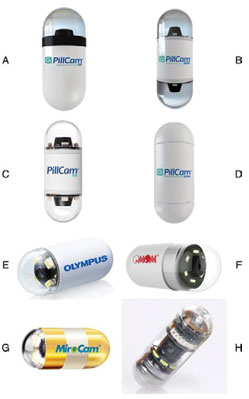
As improvements were made in both software design and digital imaging and semiconductor technology, other WCE-based products were introduced into a burgeoning competitive market. Essentially, most of these products were similar in design, with minor differences in extended battery life, enhanced field of view, and reduction in cost. The importance within the gastroenterology field of having a minimally invasive endoscopic modality that can view segments of the gastrointestinal tract has been well recognized by the medical industry. For the most part, this well-placed interest has driven the competition to introduce wireless capsule models designed to evaluate not only the upper GI tract and small bowel, but also the colon! It is now possible for gastroenterologists to evaluate the entire gastrointestinal tract with a relatively low-risk procedure that utilizes a disposable device that can capture real-time images and record them for review. The term “pan-endoscopy” has taken on a whole new meaning.
There are currently five wireless capsule models designed for small bowel evaluation that are FDA approved in the US which are MiroCam®, Endocapsule®, Pillcam SB3®, Omom, and CapsoCam. More recently capsules integrating multiple cameras have been gaining recognition. Capsule®Colon and Capsule®UGI both acquire images with camera lenses looking forward and backward. CapsoCam has been well received by the gastroenterology community. This capsule device has a rotating side viewing configuration that can map the entire surrounding lumen around the capsule and thus ensures a continuous monitoring of the mucosa as it traverses the segments of the gastrointestinal tract.
"The WCE design is small enough to be swallowed by the patient, which then digitally captures images and transmit them via radio frequency to a data recorder while traversing the intestinal tract"
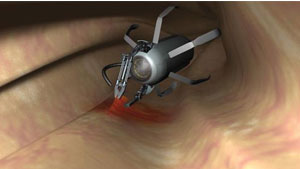 One of the significant limitations that continue to frustrate the interventional endoscopist’s psyche about these devices is their purely diagnostic capabilities. Thanks to advances and developments in microsystem technology and micromachining, robotic capsule platform technology are rapidly expanding. To design a robotic capsule device that would satisfy the interventionist’s ideologies, would require integration of locomotion, localization, vision, telemetry, power, and diagnostic and treatment tools capabilities. Engineers are addressing maneuverability within the GI tract by using flapping fin-like propulsion devices and leg based prototypes. Other platforms utilize external propulsion via magnets to maneuver the capsule device. For therapeutic capabilities, researchers have embedded therapeutic modules. Some devices can electronically deploy an endoscopy clip or a bio-adhesive patch on to a bleeding site in the GI tract. Another capsule device can hold small quantities of Hemospray® and position its delivery on a specified target. There are even prototypes of biopsy capsule devices designed to obtain tissue sampling.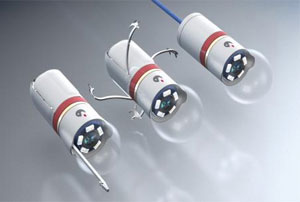
Now, ‘it takes just one small step’ of faith to envision how this technology will be used for the benefit of our patients in the future. Those of us who are aware of the current trends in running an endoscopy unit find infection control to be a top priority. As concerns for carbapenem-resistant enterococcus has taken the inadequacies of scope reprocessing to new heights, equipment reprocessing is the central focus of quality assurance and patient safety in gastrointestinal endoscopy. Because of the low risk and ease of use, I believe WCE will be first line modality for visualizing the gastrointestinal tract. The saving of healthcare dollars and resources would make it cost effective. By the mere fact that WCE requires no sedation, little to no work hours lost by the patient and no need for reprocessing with high-level disinfection of expensive sensitive equipment, makes this inherently an important cost-saving strategy. To make this possible, it would require third-party payers and leading medical societies such as the
ASGE, ACG, AGA and the USPTF to align themselves, validate and approve this viable strategy.
There is little doubt that we will continue to be dependent on our current flexible endoscopic technology, but I envision a day when these resources would only be used for cases with appropriate risk/benefit ratios and that would merit from such an intervention. At the very least, the current trends in WCE technology warrants gastroenterologist to undergo a serious self-analysis as we move forward in developing our endoscopic skills and training in the years to come.
Check This Out: Top Endoscopy Solution Companies