Medical Tech Outlook Weekly Brief
Be first to read the latest tech news, Industry Leader's Insights, and CIO interviews of medium and large enterprises exclusively from Medical Tech Outlook
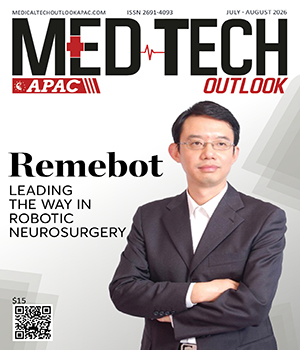
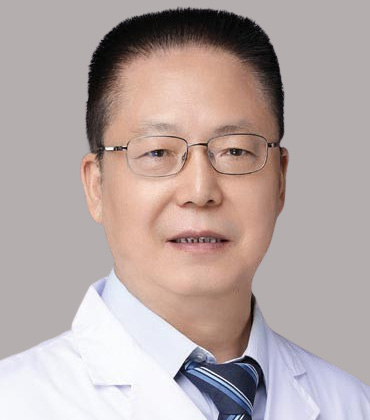
Since its establishment in 2010, Remebot has emerged as one of the most influential players in the field of neurosurgical robotics. Headquartered in Beijing, with R&D roots tracing back to 1997, the company has consistently adhered to a philosophy of deeply integrating technological innovation with clinical needs. To date, Remebot has completed over 50,000 clinical procedures and is deployed in more than 550 hospitals worldwide, making it not only a benchmark for "Intelligent Manufacturing in China" but also a significant force shaping the future of global neurosurgery. Remebot’s core competitiveness stems from two pillars: close clinical collaboration and independent mastery of core technologies. The company insists on co-developing solutions with neurosurgeons, ensuring its products address real surgical challenges rather than theoretical possibilities. At the same time, by building its own technological system, Remebot has successfully eliminated dependence on imported components, enabling rapid and precise innovation. The result of this strategy is the company’s pioneering "Brain-Eye-Hand" system architecture, a first-of-its-kind in the industry. Offering a Full Matrix of Systems The Reme-Studio® AI Surgical Planning System serves as the "Brain," enabling one-click registration, fusion segmentation, and surgical planning. It intelligently segments personalized whole-brain maps covering 95 fine-grained brain subregions, as well as intracranial hematomas, tumors, edema, and functional nuclei, while automatically planning safe surgical paths. The Reme-Vision® Multispectral Tracking Platform acts as the "Eye," achieving sub-millimeter accuracy (<0.1mm). It supports both optical and infrared markers and features surgical scene reconstruction. The Reme-Explorer Large-Reach Robotic Arm functions as the "Hand," offering six degrees of freedom for full
Historically, keeping a wound dry was considered the quickest way to heal chronic wounds. However, with decades of research and studies and endless effort by the industry, a moist wound healing theory and system have been established over the last 30 years. This requires wound dressings to absorb the exudates and provide a moist environment to achieve optimum healing effects. Taking advantage of this new theory, Foshan United Medical Technologies Ltd. (UMT), a prominent technology company specializing in designing and manufacturing advanced wound care products for acute and chronic injuries, has become the vanguard of recently emerged manufacturers of advanced wound care products. UMT achieved this by improving the standards of wound care products and pursuing better product performance through innovations. Driven by managing director Dr. Xiaodong Wang’s 30- plus years of experience in research and development, manufacturing management, quality control, compliance, and customer service, the firm has become an industry leader with a solid foundation for success. UMT’s wound care prowess is powered by its emphasis on using high-quality materials to build products of exceptional quality and impeccable regulatory compliance. One of the company’s competencies is the fibrous materials—alginate, chitosan, and carboxymethyl cellulose (CMC), which serve as the basis for delivering outstanding results. Alginate, derived from seaweed, is renowned for its exceptional absorbency properties. UMT has brought alginate wound dressings to a higher standard with significant fluid handling capability that enables efficient absorption and creates a moist healing environment for chronic wounds. Similarly, the company’s CMC-driven products possess exceptional absorbency and form a soft gel upon contact with wound fluid or water. This unique material promotes gentle and effective moisture absorption for a favorable healing environment. UMT has also developed a patented chitosan wound dressing that overcomes chitosan’s conventional limitations and modifies the material’s absorbency and bacteriostatic properties, delivering a unique and effective way to stop bleeding and promote healing. These attributes are particularly beneficial for wound care, as bleeding and infection risks are expected when the skin is compromised.

Osteoarthritis affects 10 percent of the global population aged 60 and above, and with the elderly population projected to double by 2050, it is expected to be the leading cause of disability by 2030. This poses the question, how is the global orthopedic community planning to prevent this future? Kaiser Technology, a medical equipment manufacturing company, aims to answer this through its comprehensive range of surgical instruments designed to holistically support orthopedic surgery. These include surgical tools, equipment for surgeon protection, patient care, and post-surgical rehabilitation, among others. “Our commitment to patient well-being encompasses every stage of their treatment, where we strive to ensure they receive the best care possible, from the moment they enter our care to the point of achieving successful recovery,” says Belén Chen, medical advisor of Kaiser Technology. Delving into its latest developments, Belén highlights Kaiser’s Warming and Cooling Therapy with Compression and how it combines the best competencies of existing treatment methodologies to deliver better patient outcomes. Cooling and heating are typically used to treat acute and chronic injuries. The current marketplace is brimming with cooling and heating solutions, including ice or hot packs, hydrocollator packs, whirlpools (cold or warm), ice machines, and infrared lamps. But all of them have drawbacks. A prevalent one is their fixing on localized body parts, which complicates the maintenance of a steady temperature and leads to additional issues. Kaiser’s solution bridges these gaps by equipping clinicians with the ability to better control the temperature, time, and compression. The machine uses cold therapy to effectively reduce swelling, inflammation, and pain, whereas its heating capabilities increase muscle elasticity and blood flow while decreasing pain and joint stiffness. Powered by solid features, the device is poised to expand Kaiser’s applicability across a broader range of medical needs, particularly in the sports medicine and rehabilitation domains. An outstanding illustration of the effectiveness of warming and cooling with compression therapy is demonstrated by Dr. Charles Cook, who applied the device to a lymphedema patient following surgery.
In Vitro Diagnostics

Michael Baron, Executive Director of Clinical Laboratory Operations, Wisconsin Diagnostic Laboratories
Regenerative Medicine

Carol Chow, Head of Pharmacy & Research, Gleneagles Hospital Hong Kong
Regenerative Medicine

Natalie Yang, Senior Medical Staff Association Chair, Austin Health
Regenerative Medicine
Janene Lawrence, Clinical Nurse Manager (Medical), Hutt Valley DHB
In Vitro Diagnostic

Whitney Johnson, Clinical Supervisor, and Group Reflective Practice Facilitator, Alfred Health

In Vitro Diagnostic
Esther May Cheam Sue San, Senior Nurse Manager, Thomson Hospital Kota Damansara

Regenerative Medicine
Christopher Leo, Chairman, Medicine Cluster, Raffles Medical Group
Disposable Healthcare Solutions Driving Safety and Access
Driven by these forces, APAC’s Disposable Orthopedic Surgical Products market is projected to reach $2.34 billion by 2030 (9.1 percent CAGR), Wound and Skin Care Products to $4.93 billion (4.8 percent CAGR), and HIV in vitro diagnostic kits to $487.7 billion by 2028 (2.57 percent CAGR).
The magazine features thought leadership articles from Esther May Cheam Sue San, Senior Nurse Manager at Thomson Hospital Kota Damansara, highlighting how integrating AI with ESG practices in critical care enhances ICU efficiency and reduces environmental impact. Michael Baron, Executive Director of Clinical Laboratory Operations at Wisconsin Diagnostic Laboratories, sheds light on the emerging trend of alternative workforce development models in clinical laboratories.
In this edition featuring APAC’s best disposable orthopedic surgical products manufacturer, wound and skin care products and HIV in vitro diagnostic kits, we hope you find the right partner to meet your organization’s needs.